

Skyeaglee OEM Gas Sensor Module for Integration
Release time:2026-09-14
Source:来源
Case Study: PC Calibration of the OEM Gas Sensor Module
The Application Scenario: Lab Bench Testing and Calibration
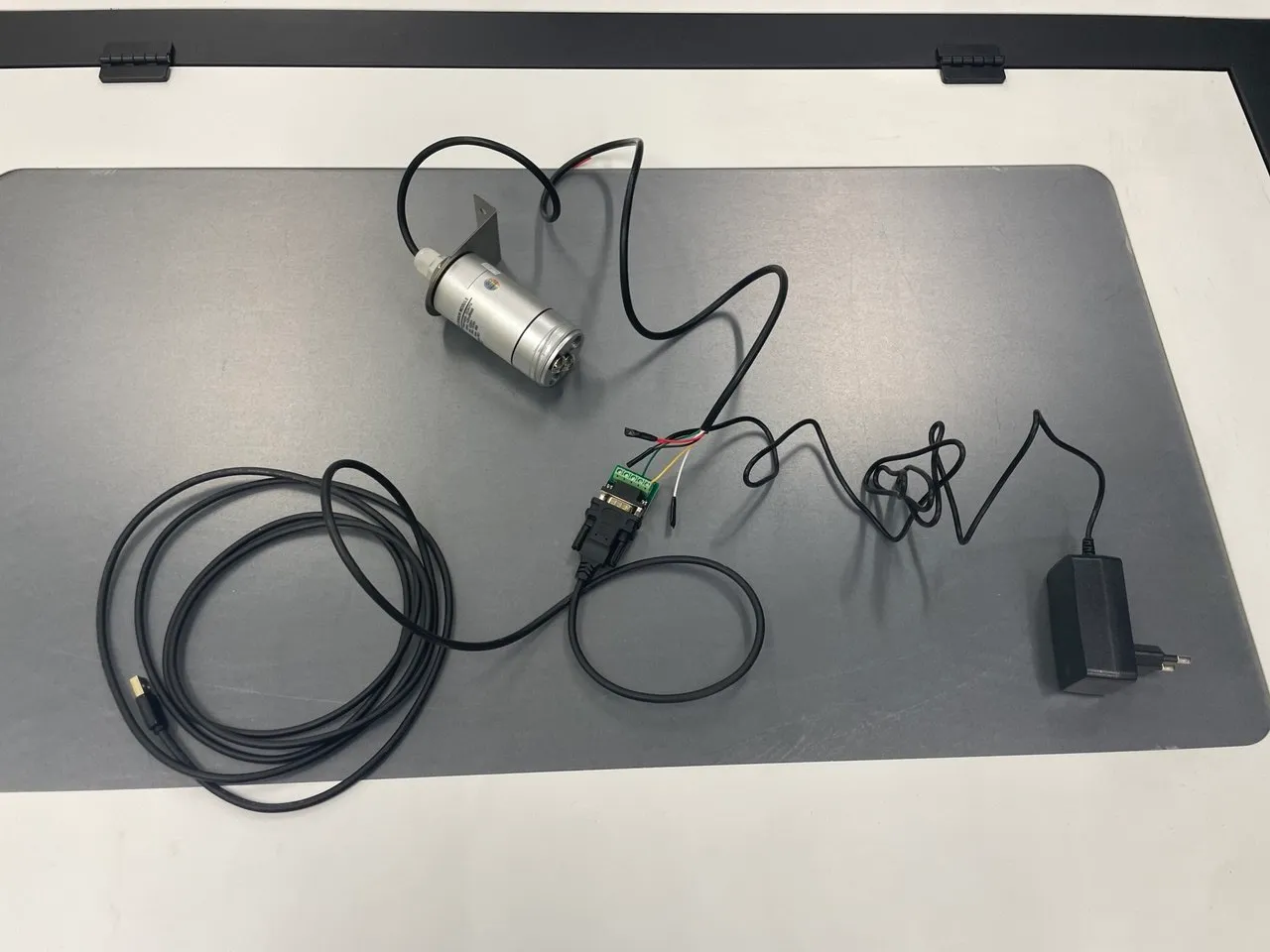
In this testing scenario, the OEM Gas Sensor Module is placed on a laboratory bench in a temporary wired state. Connected via a serial-to-USB communication board and an independent power adapter, the module interfaces directly with PC software. This crucial pre-factory calibration and joint debugging phase ensures the Digital Gas Sensing Board delivers flawless accuracy before it is encased in its final industrial housing and shipped to equipment manufacturers.
Why Integrate This Industrial Gas Detection Module?
Equipment developers rely on this core module to build robust safety devices. Depending on the industry, the module can be equipped with electrochemical, PID, or infrared sensors to detect target gases like VOCs, SO2, and CO. Monitoring these gases serves vital industrial purposes:
1. Preventing Toxic Exposure (SO2 and CO)
Gases like SO2 (Sulfur Dioxide) and CO (Carbon Monoxide) are common, highly toxic byproducts of combustion and industrial processing. Integrating this module allows end-users to detect dangerous leaks instantly, preventing acute poisoning and ensuring strict worker safety compliance.
2. Controlling Environmental Emissions (VOCs)
Volatile Organic Compounds (VOCs) pose long-term health risks and environmental damage. By utilizing this core module, manufacturers can build high-precision monitors that help factories track emission limits and avoid environmental penalties.
Advantages of the Smart Gas Transmitter Module
This Smart Gas Transmitter Module is designed for seamless secondary development. Because it outputs standardized digital signals after factory calibration, system integrators can bypass complex analog signal processing. Whether designing portable detectors or fixed monitoring stations, this module significantly reduces R&D time and ensures industrial-grade reliability.
Case Study: PC Calibration of the OEM Gas Sensor Module
The Application Scenario: Lab Bench Testing and Calibration
In this testing scenario, the OEM Gas Sensor Module is placed on a laboratory bench in a temporary wired state. Connected via a serial-to-USB communication board and an independent power adapter, the module interfaces directly with PC software. This crucial pre-factory calibration and joint debugging phase ensures the Digital Gas Sensing Board delivers flawless accuracy before it is encased in its final industrial housing and shipped to equipment manufacturers.
Why Integrate This Industrial Gas Detection Module?
Equipment developers rely on this core module to build robust safety devices. Depending on the industry, the module can be equipped with electrochemical, PID, or infrared sensors to detect target gases like VOCs, SO2, and CO. Monitoring these gases serves vital industrial purposes:
1. Preventing Toxic Exposure (SO2 and CO)
Gases like SO2 (Sulfur Dioxide) and CO (Carbon Monoxide) are common, highly toxic byproducts of combustion and industrial processing. Integrating this module allows end-users to detect dangerous leaks instantly, preventing acute poisoning and ensuring strict worker safety compliance.
2. Controlling Environmental Emissions (VOCs)
Volatile Organic Compounds (VOCs) pose long-term health risks and environmental damage. By utilizing this core module, manufacturers can build high-precision monitors that help factories track emission limits and avoid environmental penalties.
Advantages of the Smart Gas Transmitter Module
This Smart Gas Transmitter Module is designed for seamless secondary development. Because it outputs standardized digital signals after factory calibration, system integrators can bypass complex analog signal processing. Whether designing portable detectors or fixed monitoring stations, this module significantly reduces R&D time and ensures industrial-grade reliability.
no data
Contact Us





Fill out the form