

Portable Pump Gas Detector for Elevated Industrial Plants
Release time:2026-09-14
Source:来源
Case Study: Remote Gas Sampling on Elevated Industrial Platforms
The Application Scenario: High-Altitude Maintenance
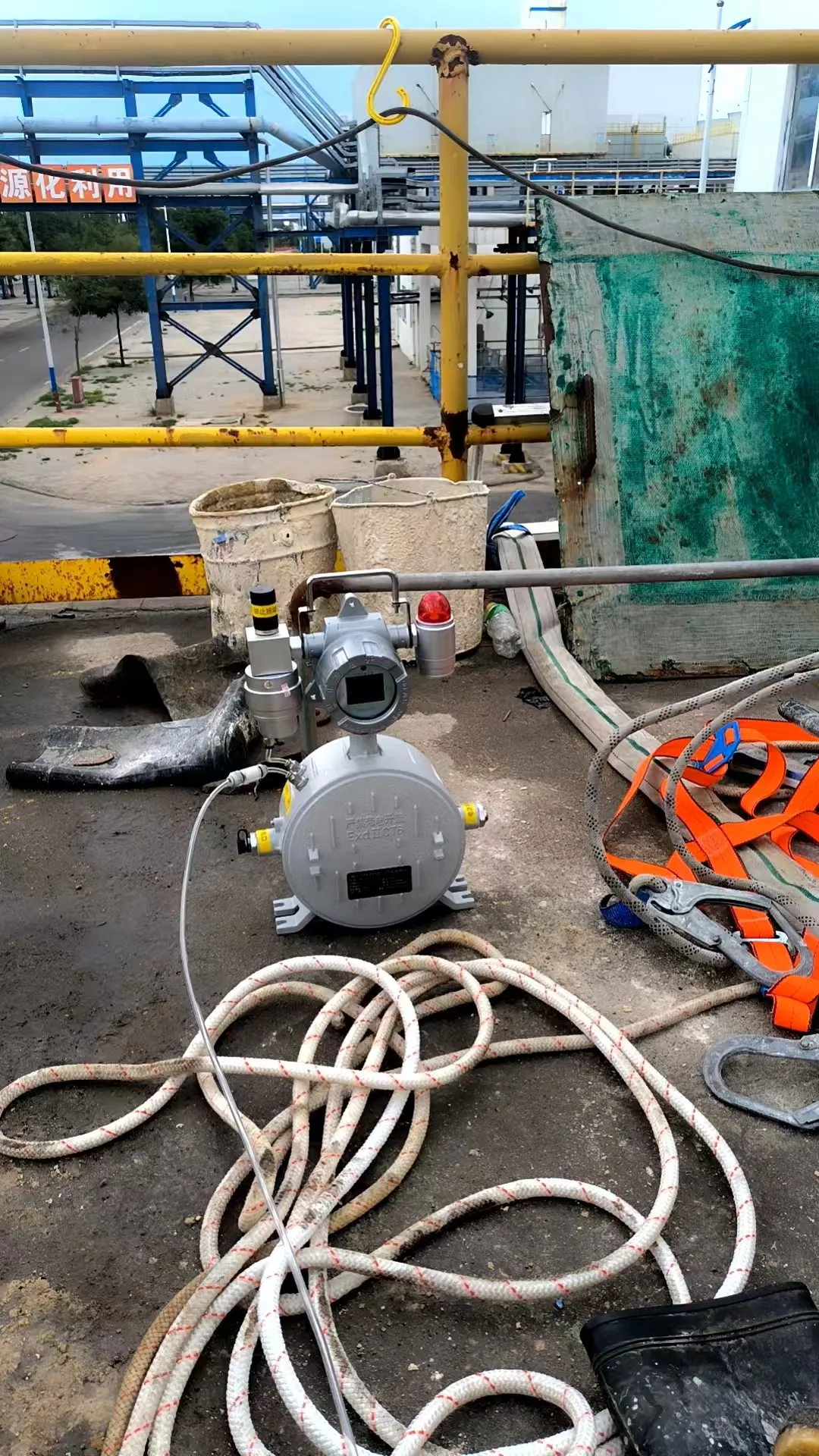
In complex chemical plants and environmental treatment facilities, routine maintenance often requires workers to operate on elevated platforms and narrow walkways. This case features our Portable Pump Gas Detector placed alongside fall protection safety harnesses on a high-altitude platform. The device is equipped with a long sampling hose, ready to perform mandatory ventilation checks and remote gas sampling before personnel enter deep pipelines or restricted areas.
Why Monitor SO2, CH4, and VOCs Before Entry?
Working in confined spaces or performing high-altitude pipeline maintenance presents severe, invisible risks. Utilizing a Heavy-Duty Gas Sniffer to extract and analyze air samples prior to entry serves two critical life-saving purposes:
1. Preventing Toxic Poisoning (SO2 and VOCs)
Chemical processing pipelines frequently harbor residual toxic gases. Sulfur Dioxide (SO2) and various Volatile Organic Compounds (VOCs) can pool in poorly ventilated areas. By using this Industrial SO2 Analyzer to draw air from deep inside the pipeline, safety officers can detect lethal concentrations without exposing themselves to the hazard.
2. Avoiding Explosion Hazards (CH4)
Combustible gases like Methane (CH4) pose an immediate threat of explosion if a spark occurs during maintenance. Continuously monitoring the Lower Explosive Limit (LEL) ensures the confined space is thoroughly purged and safe for hot work.
Advantages of the Portable Pump Gas Detector
This Confined Space Gas Monitor is engineered for the toughest industrial environments. Unlike standard diffusion monitors, its powerful internal pump actively draws gas samples from dozens of meters away through a flexible hose. This allows safety teams to accurately assess the internal atmosphere of tanks, deep pits, and elevated pipes while remaining safely outside the danger zone.
Case Study: Remote Gas Sampling on Elevated Industrial Platforms
The Application Scenario: High-Altitude Maintenance
In complex chemical plants and environmental treatment facilities, routine maintenance often requires workers to operate on elevated platforms and narrow walkways. This case features our Portable Pump Gas Detector placed alongside fall protection safety harnesses on a high-altitude platform. The device is equipped with a long sampling hose, ready to perform mandatory ventilation checks and remote gas sampling before personnel enter deep pipelines or restricted areas.
Why Monitor SO2, CH4, and VOCs Before Entry?
Working in confined spaces or performing high-altitude pipeline maintenance presents severe, invisible risks. Utilizing a Heavy-Duty Gas Sniffer to extract and analyze air samples prior to entry serves two critical life-saving purposes:
1. Preventing Toxic Poisoning (SO2 and VOCs)
Chemical processing pipelines frequently harbor residual toxic gases. Sulfur Dioxide (SO2) and various Volatile Organic Compounds (VOCs) can pool in poorly ventilated areas. By using this Industrial SO2 Analyzer to draw air from deep inside the pipeline, safety officers can detect lethal concentrations without exposing themselves to the hazard.
2. Avoiding Explosion Hazards (CH4)
Combustible gases like Methane (CH4) pose an immediate threat of explosion if a spark occurs during maintenance. Continuously monitoring the Lower Explosive Limit (LEL) ensures the confined space is thoroughly purged and safe for hot work.
Advantages of the Portable Pump Gas Detector
This Confined Space Gas Monitor is engineered for the toughest industrial environments. Unlike standard diffusion monitors, its powerful internal pump actively draws gas samples from dozens of meters away through a flexible hose. This allows safety teams to accurately assess the internal atmosphere of tanks, deep pits, and elevated pipes while remaining safely outside the danger zone.
no data
Contact Us





Fill out the form