

Skyeaglee In-Situ Dust Monitor for Exhaust Ducts
Release time:2026-09-14
Source:来源
Case Study: Continuous Dust Monitoring in Industrial Ducts
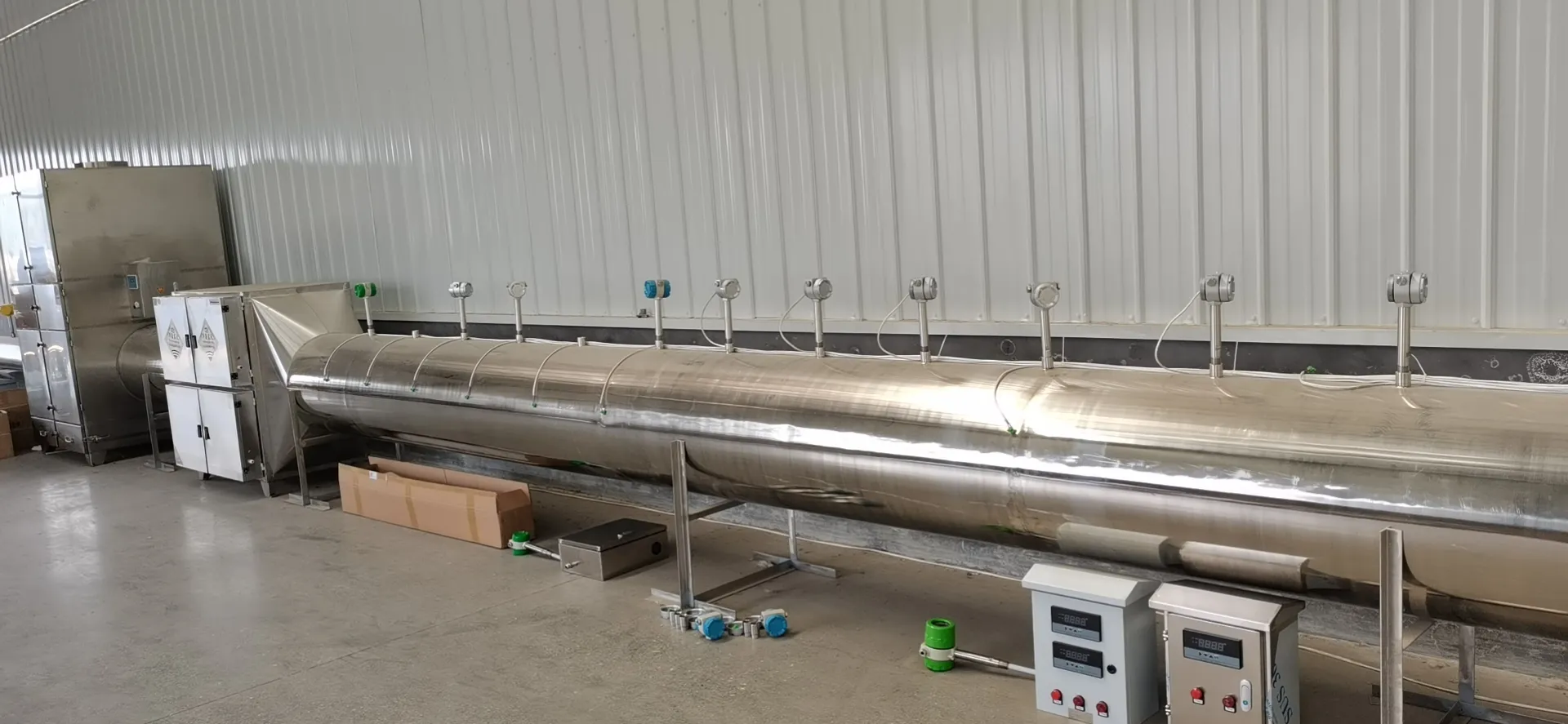
The Application Scenario: Array Installation on Main Exhaust Ducts
In modern manufacturing facilities, large-scale ventilation and exhaust systems are critical for maintaining air quality. This case highlights a highly organized array of our Insertion Dust Detector units installed directly onto a horizontal stainless steel main duct. The measurement probes are inserted directly into the airflow path. Below the duct, a centralized control and display cabinet aggregates real-time data from all sensor nodes, providing operators with a comprehensive overview of the entire exhaust line.
Why Monitor Particulate Matter in Ducts?
Industrial processes generate significant amounts of suspended particulate matter, such as PM10 and PM2.5. Continuously monitoring the concentration of these particles within exhaust or circulating air serves two primary industrial purposes:
1. Optimizing Filtration Efficiency
Before industrial exhaust is released into the atmosphere, it typically passes through large baghouses or electrostatic precipitators. By using a Duct Particulate Matter Sensor downstream from these cleaning systems, plant managers can instantly detect filter tears, bag leaks, or degraded filtration efficiency in real time.
2. Ensuring Strict Environmental Compliance
Environmental regulations strictly cap the amount of industrial dust that can be legally discharged. Using an Industrial Dust Emission Monitor provides continuous, verifiable data proving that the facility's emissions remain well below the legal limits, protecting the company from heavy environmental fines and operational shutdowns.
Key Advantages of the In-Situ Dust Monitor
Unlike extractive sampling systems that require complex sample handling, this in-situ design measures the dust concentration directly within the active airflow. This direct-insertion method minimizes data lag, reduces maintenance requirements, and delivers highly accurate, continuous readings critical for automated industrial control systems.
Case Study: Continuous Dust Monitoring in Industrial Ducts
The Application Scenario: Array Installation on Main Exhaust Ducts
In modern manufacturing facilities, large-scale ventilation and exhaust systems are critical for maintaining air quality. This case highlights a highly organized array of our Insertion Dust Detector units installed directly onto a horizontal stainless steel main duct. The measurement probes are inserted directly into the airflow path. Below the duct, a centralized control and display cabinet aggregates real-time data from all sensor nodes, providing operators with a comprehensive overview of the entire exhaust line.
Why Monitor Particulate Matter in Ducts?
Industrial processes generate significant amounts of suspended particulate matter, such as PM10 and PM2.5. Continuously monitoring the concentration of these particles within exhaust or circulating air serves two primary industrial purposes:
1. Optimizing Filtration Efficiency
Before industrial exhaust is released into the atmosphere, it typically passes through large baghouses or electrostatic precipitators. By using a Duct Particulate Matter Sensor downstream from these cleaning systems, plant managers can instantly detect filter tears, bag leaks, or degraded filtration efficiency in real time.
2. Ensuring Strict Environmental Compliance
Environmental regulations strictly cap the amount of industrial dust that can be legally discharged. Using an Industrial Dust Emission Monitor provides continuous, verifiable data proving that the facility's emissions remain well below the legal limits, protecting the company from heavy environmental fines and operational shutdowns.
Key Advantages of the In-Situ Dust Monitor
Unlike extractive sampling systems that require complex sample handling, this in-situ design measures the dust concentration directly within the active airflow. This direct-insertion method minimizes data lag, reduces maintenance requirements, and delivers highly accurate, continuous readings critical for automated industrial control systems.
no data
Contact Us





Fill out the form