

Skyeaglee Fixed Multi-Gas Detector for Tunnel Shaft
Release time:2026-09-12
Source:来源
Case Study: Confined Space Safety in Tunnel Construction
The Application Scenario: Deep Foundation Pits
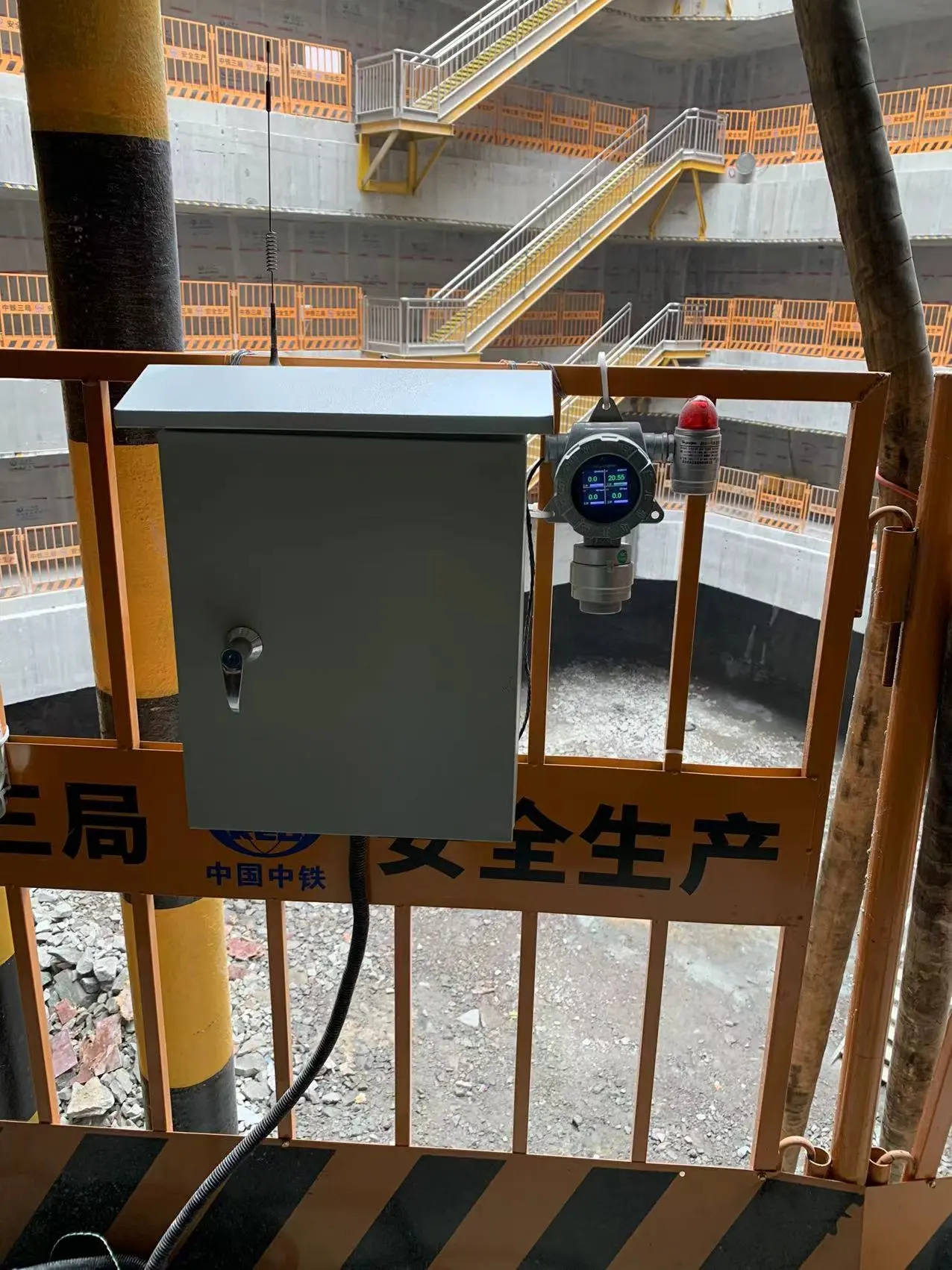
In large-scale underground engineering and high-speed railway projects, construction shafts represent critical high-risk zones. This case showcases our Tunnel Gas Monitoring System mounted directly on the guardrail of a deep foundation pit. Equipped with a high-gain wireless transmission antenna, the device provides continuous, remote safety monitoring for workers operating in these restricted underground spaces without requiring complex communication wiring.
Why Monitor O2, CH4, CO, and H2S?
Underground environments are notorious for poor ventilation, leading to the rapid accumulation of hazardous gases. This Confined Space Gas Detector is configured to simultaneously monitor four critical parameters to comply with strict underground safety standards:
1. Preventing Hypoxia (O2)
In deep pits, oxygen levels can drop dangerously low. The detector actively monitors O2 concentrations (currently showing a safe 20.55 on the screen) to alert workers of potential suffocation risks before they enter the shaft.
2. Avoiding Fire and Explosions (LEL/CH4)
Methane (CH4) and other combustible gases often seep from excavated earth. Monitoring the Lower Explosive Limit (LEL) ensures any flammable gas buildup is detected instantly to prevent catastrophic tunnel explosions.
3. Guarding Against Toxic Poisoning (CO & H2S)
Heavy machinery exhaust produces Carbon Monoxide (CO), while stagnant underground water can release highly toxic Hydrogen Sulfide (H2S). Real-time tracking of these toxic gases prevents acute poisoning and ensures a safe breathing environment for the crew.
The Wireless 4-Gas Monitor Advantage
Designed for rugged industrial use, this Wireless 4-Gas Monitor combines a durable, weather-proof protective cabinet with high-precision sensors and a highly visible red alarm beacon. By transmitting real-time atmospheric data back to the surface control center, it guarantees 24/7 protection for front-line railway construction teams.
Case Study: Confined Space Safety in Tunnel Construction
The Application Scenario: Deep Foundation Pits
In large-scale underground engineering and high-speed railway projects, construction shafts represent critical high-risk zones. This case showcases our Tunnel Gas Monitoring System mounted directly on the guardrail of a deep foundation pit. Equipped with a high-gain wireless transmission antenna, the device provides continuous, remote safety monitoring for workers operating in these restricted underground spaces without requiring complex communication wiring.
Why Monitor O2, CH4, CO, and H2S?
Underground environments are notorious for poor ventilation, leading to the rapid accumulation of hazardous gases. This Confined Space Gas Detector is configured to simultaneously monitor four critical parameters to comply with strict underground safety standards:
1. Preventing Hypoxia (O2)
In deep pits, oxygen levels can drop dangerously low. The detector actively monitors O2 concentrations (currently showing a safe 20.55 on the screen) to alert workers of potential suffocation risks before they enter the shaft.
2. Avoiding Fire and Explosions (LEL/CH4)
Methane (CH4) and other combustible gases often seep from excavated earth. Monitoring the Lower Explosive Limit (LEL) ensures any flammable gas buildup is detected instantly to prevent catastrophic tunnel explosions.
3. Guarding Against Toxic Poisoning (CO & H2S)
Heavy machinery exhaust produces Carbon Monoxide (CO), while stagnant underground water can release highly toxic Hydrogen Sulfide (H2S). Real-time tracking of these toxic gases prevents acute poisoning and ensures a safe breathing environment for the crew.
The Wireless 4-Gas Monitor Advantage
Designed for rugged industrial use, this Wireless 4-Gas Monitor combines a durable, weather-proof protective cabinet with high-precision sensors and a highly visible red alarm beacon. By transmitting real-time atmospheric data back to the surface control center, it guarantees 24/7 protection for front-line railway construction teams.
no data
Contact Us





Fill out the form