

Portable N2O Gas Detector for Medical Gas System Testing
Release time:2026-07-09
Source:来源
Real-World Application: On-Site Testing for Medical Gas Systems
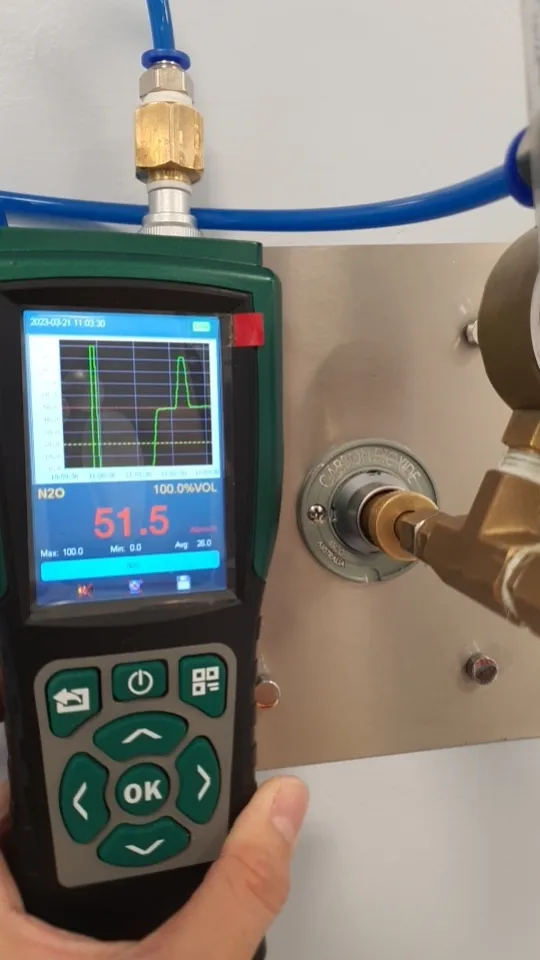
The image below shows a real on-site testing scenario: a handheld N2O gas detector connected to an Australian standard medical gas terminal marked "CARBON DIOXIDE" and "AUSTRALIA", performing concentration verification for a hospital's medical gas pipeline system. This is exactly the daily work scenario of medical gas operation and maintenance teams in healthcare facilities.
Accurate medical gas detection is the core foundation of healthcare safety: it not only ensures the stability of clinical gas supply for patients, but also reduces the occupational exposure risk of medical staff, and helps facilities meet regulatory compliance requirements.
Key Application Scenarios for This Medical Gas Detector
Clinical Area Gas Supply Concentration Verification
This device is suitable for terminal gas concentration calibration in clinical gas areas such as hospital operating rooms, dental clinics and ICUs. For example, it can verify the concentration of nitrous oxide used for dental sedation, to ensure the gas concentration meets clinical treatment standards and avoid treatment risks caused by concentration deviation.
Central Gas Station & Pipeline Operation Maintenance
For medical central gas supply stations and gas pipeline machine rooms, the detector supports daily operation inspection and leak troubleshooting. It can quickly detect gas leakage at pipeline connections, valves and terminals, help maintenance teams find hidden dangers in time, and ensure the stable operation of the whole gas supply system.
Project Acceptance & Periodic Compliance Testing
After the installation of medical gas engineering projects, the device can be used for completion acceptance testing; it also supports regular compliance inspection of gas systems in medical institutions, to meet the requirements of industry supervision and hospital management norms, and provide data support for compliance audits.
Compatibility with Australian Standard Medical Gas Systems
As shown in the picture, the detector can be connected to Australian standard medical gas terminals, and is fully compatible with the medical gas system specifications of Australia. It is an ideal testing tool for medical facilities, medical gas engineering contractors and third-party testing institutions in the Australian market.
Core Technical Advantages for High Concentration Gas Detection
Wide Range High Accuracy N2O Concentration Measurement
The detector supports a measuring range of 0 to 100% VOL for N2O, with high detection accuracy. As shown on the device screen, the real-time N2O concentration value is 51.5% VOL, which can meet the needs of both low-concentration leak detection and high-concentration gas purity verification in medical gas systems, covering full-scene testing requirements.
Real-Time Trend Monitoring & Visual Data Display
Intuitive Concentration Trend Curve
The color screen displays the real-time concentration change trend curve, which can visually present the fluctuation of gas concentration in a period of time, helping testing personnel quickly judge the stability of gas supply and the development trend of leakage.
Multi-Dimensional Data Display
The interface synchronously shows the maximum value, minimum value and average value of concentration, without manual calculation. Testing personnel can directly read comprehensive data on site, which greatly improves the efficiency of on-site testing work.
How This Device Enhances Healthcare Safety & Compliance
Protecting Patient Gas Supply Safety
By accurately verifying the gas concentration at clinical terminals, the device can avoid treatment risks caused by insufficient gas purity or concentration deviation, ensure that the medical gas used by patients meets the standard requirements, and guard the safety of clinical gas use.
Reducing Occupational Exposure Risks for Medical Staff
Long-term exposure to trace leaked medical gases such as N2O will affect the health of medical staff. The leak detection function of this device can quickly find tiny leaks at pipelines and terminals, help facilities eliminate hidden dangers in time, and reduce the occupational health risk of front-line medical and nursing personnel.
Supporting Regulatory Compliance & Audit Requirements
The device meets the testing specifications of medical gas system operation and maintenance, and can retain real and reliable testing data. It helps medical institutions complete daily compliance management, and provides strong data support for third-party audits and regulatory inspections.
Portable Design for Efficient Field Testing Workflow
Lightweight Handheld Structure for Mobile Operation
With portable handheld design and lightweight body, the detector is very suitable for mobile operation scenarios such as on-site inspection and multi-point testing. It does not need complex installation and fixation, and can be used immediately after being taken out, which is convenient for testing personnel to carry around in the hospital.
User-Friendly Interface & Simple Operation
The device adopts physical key layout with clear logic, and the color screen interface is intuitive and easy to read. Front-line operation and maintenance personnel can get started quickly without complicated training, which reduces the use threshold and improves the efficiency of on-site testing work.
Frequently Asked Questions
What gases can this medical gas detector measure?
This detector supports high concentration N2O detection as standard, and can also be customized to detect carbon dioxide and other common medical gases according to actual testing needs.
What is the measuring range for N2O?
The N2O measuring range is 0 to 100% VOL, which can cover both low-concentration leak detection and high-concentration gas purity verification scenarios for medical gas systems.
Is this device compatible with Australian standard medical gas terminals?
Yes, it is fully compatible with Australian standard medical gas terminals, and is suitable for medical gas testing work in Australian healthcare facilities, medical gas engineering projects and third-party testing institutions.
Can it record and display real-time concentration trends?
Yes, the color screen of the device displays real-time concentration trend curves, and synchronously shows the maximum, minimum and average concentration values, which is convenient for on-site intuitive analysis and data recording.
Real-World Application: On-Site Testing for Medical Gas Systems
The image below shows a real on-site testing scenario: a handheld N2O gas detector connected to an Australian standard medical gas terminal marked "CARBON DIOXIDE" and "AUSTRALIA", performing concentration verification for a hospital's medical gas pipeline system. This is exactly the daily work scenario of medical gas operation and maintenance teams in healthcare facilities.
Accurate medical gas detection is the core foundation of healthcare safety: it not only ensures the stability of clinical gas supply for patients, but also reduces the occupational exposure risk of medical staff, and helps facilities meet regulatory compliance requirements.
Key Application Scenarios for This Medical Gas Detector
Clinical Area Gas Supply Concentration Verification
This device is suitable for terminal gas concentration calibration in clinical gas areas such as hospital operating rooms, dental clinics and ICUs. For example, it can verify the concentration of nitrous oxide used for dental sedation, to ensure the gas concentration meets clinical treatment standards and avoid treatment risks caused by concentration deviation.
Central Gas Station & Pipeline Operation Maintenance
For medical central gas supply stations and gas pipeline machine rooms, the detector supports daily operation inspection and leak troubleshooting. It can quickly detect gas leakage at pipeline connections, valves and terminals, help maintenance teams find hidden dangers in time, and ensure the stable operation of the whole gas supply system.
Project Acceptance & Periodic Compliance Testing
After the installation of medical gas engineering projects, the device can be used for completion acceptance testing; it also supports regular compliance inspection of gas systems in medical institutions, to meet the requirements of industry supervision and hospital management norms, and provide data support for compliance audits.
Compatibility with Australian Standard Medical Gas Systems
As shown in the picture, the detector can be connected to Australian standard medical gas terminals, and is fully compatible with the medical gas system specifications of Australia. It is an ideal testing tool for medical facilities, medical gas engineering contractors and third-party testing institutions in the Australian market.
Core Technical Advantages for High Concentration Gas Detection
Wide Range High Accuracy N2O Concentration Measurement
The detector supports a measuring range of 0 to 100% VOL for N2O, with high detection accuracy. As shown on the device screen, the real-time N2O concentration value is 51.5% VOL, which can meet the needs of both low-concentration leak detection and high-concentration gas purity verification in medical gas systems, covering full-scene testing requirements.
Real-Time Trend Monitoring & Visual Data Display
Intuitive Concentration Trend Curve
The color screen displays the real-time concentration change trend curve, which can visually present the fluctuation of gas concentration in a period of time, helping testing personnel quickly judge the stability of gas supply and the development trend of leakage.
Multi-Dimensional Data Display
The interface synchronously shows the maximum value, minimum value and average value of concentration, without manual calculation. Testing personnel can directly read comprehensive data on site, which greatly improves the efficiency of on-site testing work.
How This Device Enhances Healthcare Safety & Compliance
Protecting Patient Gas Supply Safety
By accurately verifying the gas concentration at clinical terminals, the device can avoid treatment risks caused by insufficient gas purity or concentration deviation, ensure that the medical gas used by patients meets the standard requirements, and guard the safety of clinical gas use.
Reducing Occupational Exposure Risks for Medical Staff
Long-term exposure to trace leaked medical gases such as N2O will affect the health of medical staff. The leak detection function of this device can quickly find tiny leaks at pipelines and terminals, help facilities eliminate hidden dangers in time, and reduce the occupational health risk of front-line medical and nursing personnel.
Supporting Regulatory Compliance & Audit Requirements
The device meets the testing specifications of medical gas system operation and maintenance, and can retain real and reliable testing data. It helps medical institutions complete daily compliance management, and provides strong data support for third-party audits and regulatory inspections.
Portable Design for Efficient Field Testing Workflow
Lightweight Handheld Structure for Mobile Operation
With portable handheld design and lightweight body, the detector is very suitable for mobile operation scenarios such as on-site inspection and multi-point testing. It does not need complex installation and fixation, and can be used immediately after being taken out, which is convenient for testing personnel to carry around in the hospital.
User-Friendly Interface & Simple Operation
The device adopts physical key layout with clear logic, and the color screen interface is intuitive and easy to read. Front-line operation and maintenance personnel can get started quickly without complicated training, which reduces the use threshold and improves the efficiency of on-site testing work.
Frequently Asked Questions
What gases can this medical gas detector measure?
This detector supports high concentration N2O detection as standard, and can also be customized to detect carbon dioxide and other common medical gases according to actual testing needs.
What is the measuring range for N2O?
The N2O measuring range is 0 to 100% VOL, which can cover both low-concentration leak detection and high-concentration gas purity verification scenarios for medical gas systems.
Is this device compatible with Australian standard medical gas terminals?
Yes, it is fully compatible with Australian standard medical gas terminals, and is suitable for medical gas testing work in Australian healthcare facilities, medical gas engineering projects and third-party testing institutions.
Can it record and display real-time concentration trends?
Yes, the color screen of the device displays real-time concentration trend curves, and synchronously shows the maximum, minimum and average concentration values, which is convenient for on-site intuitive analysis and data recording.
no data
Contact Us





Fill out the form