

Outdoor Air Quality Monitoring System for Industrial Parks
Release time:2026-09-14
Source:来源
Case Study: Fence Line Air Monitoring in Industrial Parks
The Application Scenario: Rooftop and Boundary Monitoring
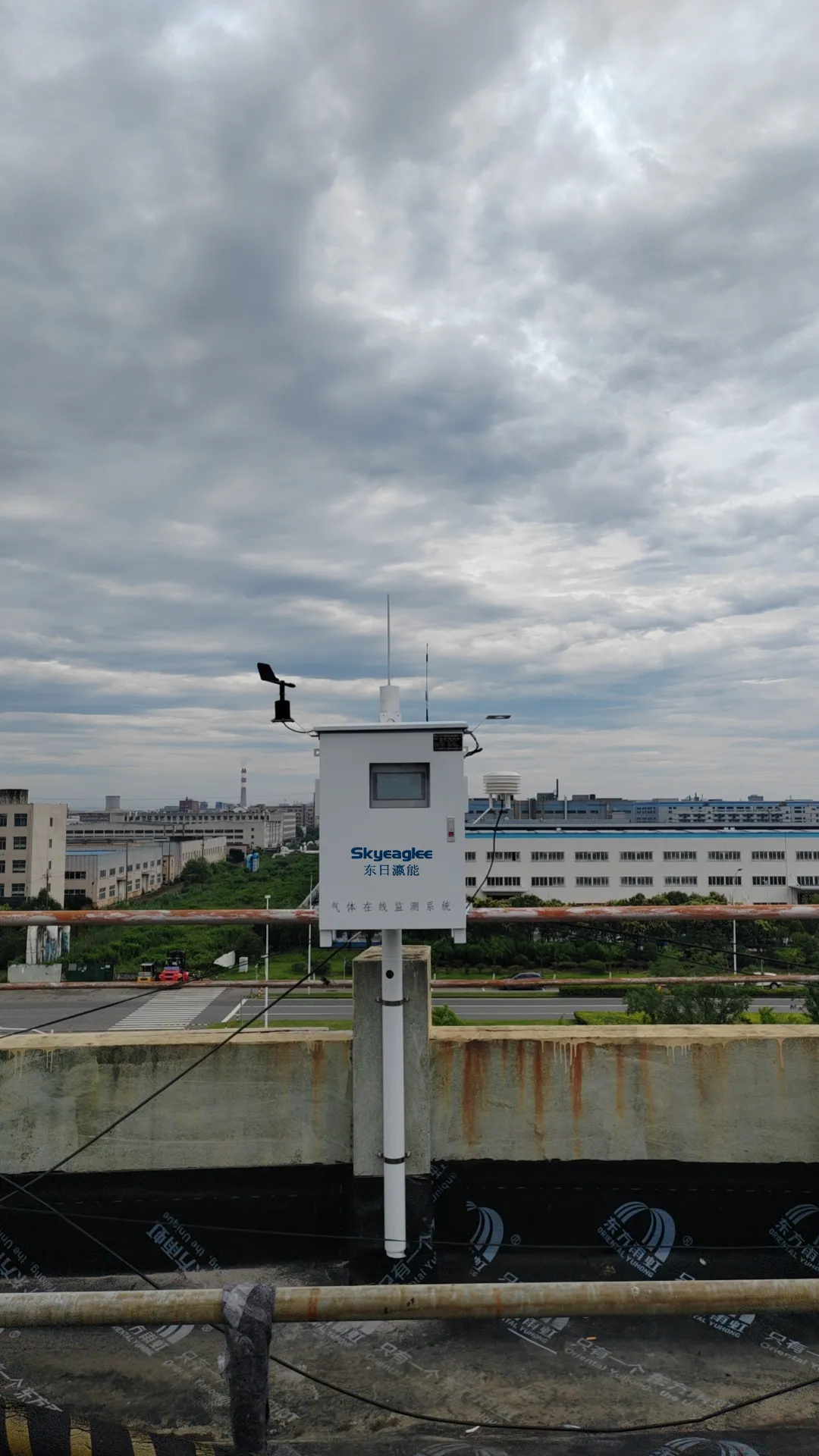
Installed on an elevated platform overlooking an industrial park, this Outdoor Air Quality Monitoring System is built for long-term outdoor deployment. Equipped with meteorological sensors like wind speed and direction meters alongside weather-proof louvers, the unit delivers all-weather boundary air quality tracking across the entire facility perimeter.
Why Monitor Ambient Pollutants and Weather Data Simultaneously?
Tracking regional air quality requires a comprehensive approach. Utilizing a Fence Line Gas Monitoring Station to measure standard pollutants alongside meteorological factors serves two core environmental objectives:
1. Tracking Gaseous Pollutants (SO2, NO2, CO, O3, and VOCs)
Industrial activities release a complex mix of gases. Continuous tracking of sulfur dioxide (SO2), nitrogen dioxide (NO2), carbon monoxide (CO), ozone (O3), and volatile organic compounds (VOCs) ensures that local chemical and manufacturing emissions remain within legal thresholds.
2. Measuring Particulate Matter and Weather Conditions (PM2.5, PM10)
Particulate pollution heavily impacts regional air quality. By combining Industrial Weather and Gas Station capabilities with real-time PM2.5 and PM10 tracking, environmental officers can correlate wind patterns with dust dispersion to pinpoint emission sources accurately.
Advantages of the Continuous Emission Monitoring System
This robust Continuous Emission Monitoring System provides automated, round-the-clock data collection for heavy industrial zones. By combining gas sensors and weather tracking into a single platform, facilities gain total visibility over their environmental impact.
Case Study: Fence Line Air Monitoring in Industrial Parks
The Application Scenario: Rooftop and Boundary Monitoring
Installed on an elevated platform overlooking an industrial park, this Outdoor Air Quality Monitoring System is built for long-term outdoor deployment. Equipped with meteorological sensors like wind speed and direction meters alongside weather-proof louvers, the unit delivers all-weather boundary air quality tracking across the entire facility perimeter.
Why Monitor Ambient Pollutants and Weather Data Simultaneously?
Tracking regional air quality requires a comprehensive approach. Utilizing a Fence Line Gas Monitoring Station to measure standard pollutants alongside meteorological factors serves two core environmental objectives:
1. Tracking Gaseous Pollutants (SO2, NO2, CO, O3, and VOCs)
Industrial activities release a complex mix of gases. Continuous tracking of sulfur dioxide (SO2), nitrogen dioxide (NO2), carbon monoxide (CO), ozone (O3), and volatile organic compounds (VOCs) ensures that local chemical and manufacturing emissions remain within legal thresholds.
2. Measuring Particulate Matter and Weather Conditions (PM2.5, PM10)
Particulate pollution heavily impacts regional air quality. By combining Industrial Weather and Gas Station capabilities with real-time PM2.5 and PM10 tracking, environmental officers can correlate wind patterns with dust dispersion to pinpoint emission sources accurately.
Advantages of the Continuous Emission Monitoring System
This robust Continuous Emission Monitoring System provides automated, round-the-clock data collection for heavy industrial zones. By combining gas sensors and weather tracking into a single platform, facilities gain total visibility over their environmental impact.
no data
Contact Us





Fill out the form